






Damascus Knife vs Stainless Steel Knife
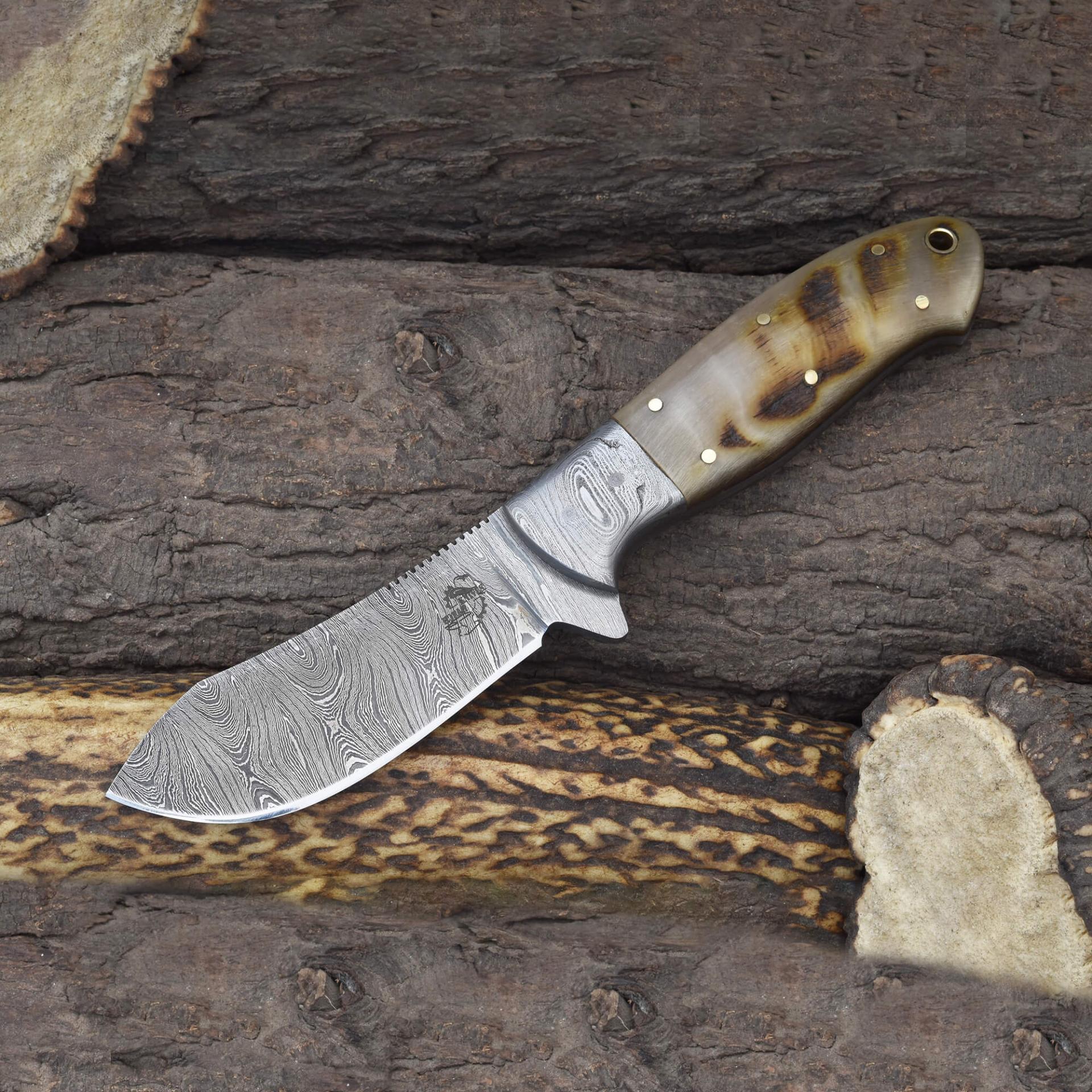
Knives Ranch Premium Damascus Steel Hunting Knife with Ramhorn Handle for Outdoor Use
$105.00
View Details
Choosing between a Damascus knife and a stainless-steel knife is one of the most common decisions knife buyers face. Both types have loyal followers and serve important roles in kitchens, outdoor settings, and professional settings. However, they are built differently, behave differently in use, and suit different user types. Understanding these differences helps you choose a knife that truly fits your needs rather than relying on appearance or marketing claims.
This guide explains the real differences between Damascus knives and stainless-steel knives, how they perform, how they age, and which one is right for you.
What Is a Damascus Knife
A single steel type does not define a Damascus knife. It is defined by a forging method. Damascus knives are created by forge welding multiple steels into layers. These layers are repeatedly heated, folded, and welded until the steel behaves as a single solid blade.
Each steel layer plays a role. One usually contributes hardness and edge retention. Another contributes toughness and flexibility. When etched, the different steels react uniquely, revealing the flowing patterns that Damascus knives are known for. These patterns are not just visual. They reflect the blade's internal layered structure.
A properly made Damascus knife is engineered for balance. It combines sharpness, durability, and resilience in a way that single steel blades often struggle to match.
What Is a Stainless-Steel Knife
A stainless-steel knife is made from a single steel alloy that contains chromium. Chromium is what gives stainless steel its corrosion resistance. When exposed to moisture or oxygen, chromium forms a protective layer that prevents rust from developing.
Stainless steel knives are widely used in kitchens and professional environments because they require less maintenance. They resist staining, tolerate moisture well, and are easy to care for. However, stainless steel knives vary greatly in quality depending on the specific alloy and heat treatment used.
Not all stainless knives perform the same. Some prioritize corrosion resistance at the cost of edge retention, while others are designed for sharper edges but require more frequent maintenance.
Cutting Performance Comparison
Damascus knives often deliver smoother cuts. This is because the layered structure allows the blade to distribute cutting stress more evenly. A well-forged Damascus knife glides through food or material with less resistance, especially during slicing tasks.
Stainless steel knives can also cut very well, especially those with high-quality blades. However, many mass-produced stainless knives are designed for durability and ease of care rather than refined cutting performance. This can result in blades that feel less responsive or require more pressure during cutting.
For users who value precise slicing and controlled cutting, Damascus knives often feel more refined in hand.
Edge Retention and Sharpness
Edge retention depends on steel hardness and heat treatment. Damascus knives often use high-carbon steel in their layers, enabling excellent edge retention. When sharpened correctly, Damascus blades can hold a keen edge for extended periods.
Stainless steel knives vary widely. Some premium stainless steels retain an edge well, while softer stainless steels dull faster but are easier to sharpen. Entry-level stainless knives typically prioritize rust resistance over long-lasting sharpness.
In practice, Damascus knives typically require less frequent sharpening than standard stainless steel knives, though both benefit from proper care.
Toughness and Durability
Durability is about how a blade handles stress. Damascus knives are designed to balance hardness with toughness. The layered structure helps absorb impact and reduce the risk of catastrophic failure. Instead of chipping suddenly, a well-made Damascus blade handles stress gradually.
Stainless steel knives can be durable, especially those made from tougher alloys designed for commercial kitchens. However, harder stainless steels can become brittle if not heat-treated correctly.
For outdoor use, hunting, or heavy cutting tasks, Damascus knives often provide greater confidence due to their balanced structure.
Rust Resistance and Maintenance
This is where stainless steel knives have a clear advantage. Stainless steel resists rust naturally and requires minimal maintenance. Washing and drying are usually enough.
Damascus knives, especially carbon-based Damascus, require more care. They should be cleaned and dried immediately after use. Occasional application of food-safe oil helps protect the blade. Stainless Damascus is available, but it is more complex to produce and typically more expensive.
Users who prefer low maintenance often lean toward stainless steel. Users who value performance and craftsmanship often accept the minimal care routine Damascus knives require.
Aesthetic and Craftsmanship Value
Damascus knives are known for their strong sense of craftsmanship. Each blade pattern is unique, shaped by the forging process itself. No two blades are identical. This gives Damascus knives a sense of individuality and heritage.
Stainless steel knives are usually uniform in appearance. While some are beautifully finished, they rarely match the visual character of Damascus.
For many users, Damascus knives feel more personal and meaningful. They are often chosen not just as tools, but as long-term companions.
Cost and Value Over Time
Stainless steel knives are available at every price point. Budget stainless knives are affordable and practical, but often require frequent replacement. Premium stainless knives can be expensive and perform exceptionally well.
Damascus knives generally cost more upfront because of the labor involved in forging and finishing. However, a quality Damascus knife can last decades when properly cared for. Over time, it becomes a better long-term investment.
Value is not just about price. It is about how a knife performs, how long it lasts, and how much satisfaction it delivers during use.
Which One Is Right for You
A stainless-steel knife is ideal if you want low maintenance, rust resistance, and simple, everyday use with minimal care.
A Damascus knife is ideal if you value cutting performance, craftsmanship, balanced strength, and long-term reliability, and you are willing to perform basic care.
Neither option is wrong. The right choice depends on your priorities.
Damascus and Stainless Steel at Knives Ranch
At Knives Ranch, both Damascus and stainless-steel knives are approached with the same philosophy. Performance comes first. Steel selection, heat treatment, and blade geometry are treated as technical disciplines rather than shortcuts.
Knives Ranch Damascus knives are forged using carefully selected steel combinations that balance hardness, toughness, and edge stability. Each blade is crafted for real use, not just appearance. For users who prefer stainless steel, Knives Ranch applies the same attention to heat treatment and ergonomics, ensuring reliability and comfort.
Whether choosing Damascus or stainless steel, Knives Ranch focuses on making knives that perform consistently and feel dependable in real-world conditions.
Final Thoughts
The debate between Damascus knives and stainless-steel knives is not about which is better universally. It is about which is better for you. Stainless steel offers convenience and corrosion resistance. Damascus offers performance, balance, and craftsmanship.
Understanding how each knife is made and how it performs in use helps you make an informed decision. A well-chosen knife becomes more than a tool. It becomes part of your daily routine and often part of your story.
If you value performance, heritage, and long-term satisfaction, Damascus knives are worth the care. If you value simplicity and low maintenance, stainless steel may be a better fit. Either way, choosing quality over shortcuts makes all the difference.
At Knives Ranch, we don’t just sell knives, we craft tools you can trust.
The Craft Behind Handmade Knives
Handmade knives combine tradition, skill, and performance, delivering tools that are built to last.

Knife industry professional with 20+ years of experience in manufacturing, global markets, and brand development. Founder of Knives Ranch Inc., focused on handcrafted, workhorse knives built to international standards.
Visit Personal Website

